If you’re flying in or out of Japan via Narita Airport, we highly recommend stopping by Naritasan Shinshoji Temple.
In this article, we’ll explore the highlights of Naritasan Temple together — from must-try local food to how to pray at a Japanese temple.
From Narita Airport, take a train bound for Chiba,Zushi,or Kurihama and get off at Narita Station.(Approx.10 minutes) From there, it’s a 10-minutes walk to Naritasan Temple.
From Narita Airport, take a train bound for Nishimagome and get off at Keisei Narita Station.(Approx.10 minutes) From there, it’s a 10-minutes walk to Naritasan Temple.
Take the JR Sobu Line or Keisei Main Line from central Tokyo (Tokyo Station or Ueno Station) to Narita Station.The journey takes around 1 hour and 15 minutes.
Top 5 Highlights of Naritasan Temple
Main Hall
© Chiba Prefectural Tourism & Local Products Association Main Hall (Great Main Hall / Daihondo) Fudō Myō-ō , the fearsome yet compassionate deity of fire and wisdom, known for protecting people and removing evil.
This grand wooden building features traditional Japanese temple architecture with intricate carvings and a peaceful atmosphere.
📸Tip :Don’t forget to look up — the ceiling is beautifully painted, and you might see monks performing rituals if you’re lucky!
Three-Story Pagoda
©Chiba Prefectural Tourism & Local Products Association Located near the Main Hall, the beautiful Three-Story Pagoda is one of the most iconic sights at Naritasan Temple.
The pagoda is richly decorated with vivid colors and detailed carvings of heavenly beings, animals, and lotus flowers.
📸Tip :It’s a perfect spot for photos, especially with the temple grounds or cherry blossoms in the background!
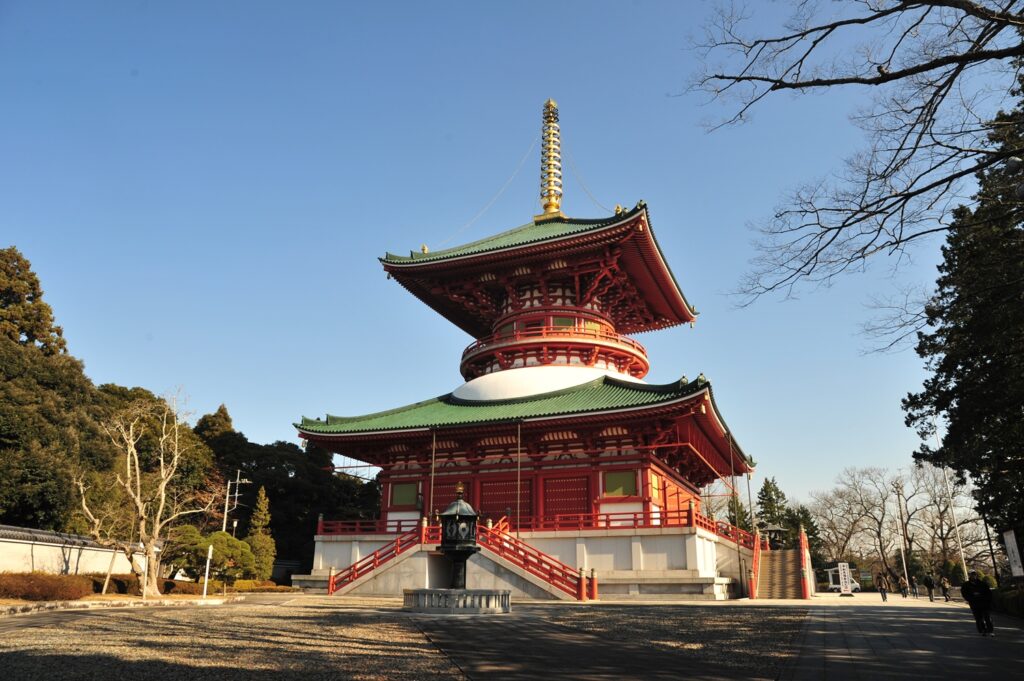
Great Peace Pagoda – Heiwa no Daitō
©Chiba Prefectural Tourism & Local Products Association The Great Peace Pagoda is a bright red, five-story tower located within Naritasan Shinshoji Temple.
Inside, you’ll find beautiful Buddhist art, statues, and peaceful spaces for quiet reflection.
Don’t miss the photo spot! The tower looks stunning with cherry blossoms in spring or autumn leaves in fall.
📸Tip :It’s a short walk uphill from the Main Hall — wear comfy shoes!
Make a Wish the Japanese Way: Omikuji, Omamori & Ema
Omikuji-Japanese Fortune Papers
After visiting the Main Hall, why not try drawing an Omikuji , a traditional Japanese fortune slip?
Omikuji are small paper fortunes that tell your luck in areas like love, health, travel, and work.
If you receive excellent luck (大吉 daikichi ), feel free to keep it.kyou ), don’t worry — just tie the paper to a nearby tree or rack to leave the bad fortune behind. 🌿
📸Tip :The types of omikuji are,in order from the best to the worst,excellent luck(大吉 dai-kichi ),good luck(中吉 chu-kichi ),small luck(小吉 sho-kichi ),fair luck(吉 kichi ),future luck(末吉 sue-kichi ),bad luck(凶 kyo ),great misfortune(大凶 dai-kyo ).
Omamori – Lucky Charms
At Naritasan Temple, you can also find a wide variety of Omamori , or Japanese lucky charms.
These small, colorful pouches are believed to bring protection and blessings in specific areas such as:
🚗 Traffic Safety
🧠 Academic Success
❤️ Love & Marriage
🧘♀️ Good Health
💼 Business Success
Each omamori is blessed and designed to be kept close — in your bag, wallet, or car.
You’ll find them sold near the main prayer hall. Prices are usually around ¥500–¥1,000, and they make great souvenirs too!
Ema – Wooden Wish Plaques
Another charming tradition at Japanese temples is writing your wishes on a small wooden plaque called an Ema .
The word Ema (絵馬) literally means “picture of a horse.” In the past, people donated horses to the gods for good fortune — nowadays, wooden plaques are used instead.
You can buy an Ema at the temple for around ¥500. Then, write your wish or prayer on the back — it can be for anything: love, success, health, exams, or travel. ✨
Once written, hang it on a special rack with others. It’s said that your wish will reach the gods this way.
📸Tip① :Many Ema have beautiful illustrations on the front — like zodiac animals, temple symbols, or seasonal designs — making them a great photo spot!
📸Tip② :Not sure what to write? Here are some simple English ideas:
・“Safe travels and a good year ahead!”
・“I wish for happiness and good health for my family.”
・“I hope to pass my exam.”
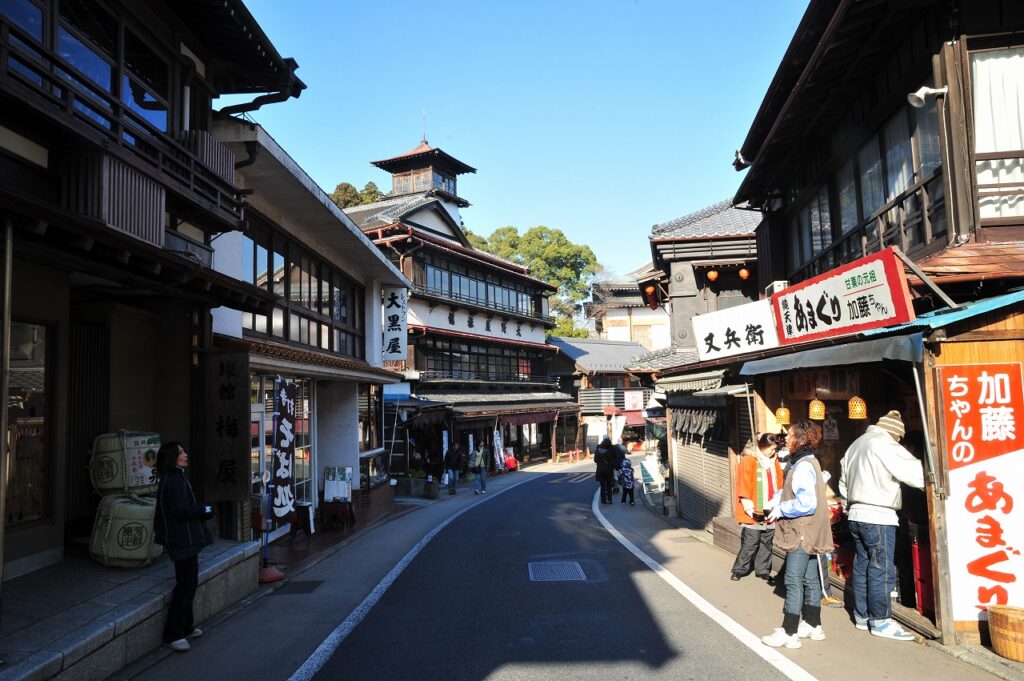
Naritasan Omotesando – A Stroll Through Tradition
©Chiba Prefectural Tourism & Local Products Association Try Local Street Food
Omotesando is famous for grilled eel (unagi) , a local specialty loved for centuries.sweet potato chips, rice crackers , and matcha soft serve — perfect for a little food adventure during your walk.
As evening approaches, the area lights up with cozy izakaya (Japanese pubs) .
Whether you’re just grabbing a quick bite or settling in for a relaxing night, there’s something delicious for everyone!
Shop for Souvenirs
Looking for a keepsake? Many stores sell handmade crafts, lucky charms, and Japanese sweets .
Enjoy the Atmosphere
The street is lined with historic buildings and a nostalgic vibe.
📸Tip :The street can get busy, especially on weekends. If you prefer a quiet experience, go early in the morning!
How to Pray at a Japanese Temple
Visiting a Japanese temple like Naritasan Shinshoji is a peaceful and meaningful experience.
Step 1: Purify Yourself at the Water Basin (Temizu)
Before praying, stop at the stone water basin (temizuya) to cleanse your hands and mouth:
Use your right hand to scoop water and rinse your left hand .
Switch hands and rinse your right hand .
Pour a little water into your left hand , then rinse your mouth (don’t touch the ladle to your lips).
Rinse the handle and return the ladle.
Step 2: Make an Offering and Pray
At the main hall , you’ll see a large offering box.
Toss a coin into the box — ¥5 (go-en) is considered lucky because it sounds like “good connection.”Bow deeply once .Put your hands together in front of your chest and make a silent wish or prayer .
Bow deeply once more to finish.
📸Tip :At temples, you don’t clap your hands like at shrines — just bow quietly.
Facilities: Free Wi-Fi, Restrooms & Coin Lockers
Traveling can be stressful without the right information — but don’t worry!essential facilities to make your visit smooth and comfortable.
Free Wi-Fi
Need to check Google Maps or post a photo?main gate and in some areas along Omotesando Street .“Free Wi-Fi CHIBA” or ask at the tourist information center.
Clean & Accessible Restrooms
There are well-maintained restrooms available:
Near the main hall of Naritasan Temple
Along Omotesando Street , often next to souvenir shops or public buildings
At Narita Station and Narita Airport for pre- or post-visit use
Most are clean, free, and equipped with Western-style toilets .
Coin Lockers
Don’t want to carry your suitcase or backpack while you explore?
Coin lockers are available at Narita Station and Narita Airport .Some shops along Omotesando also offer luggage storage services (ask inside).
Prices usually range from ¥300 to ¥700 , depending on size.
📸Tip :Keep some coins handy just in case the lockers don’t accept IC cards.
💡Note :Availability may vary by location and time. We recommend asking staff or visiting the tourist information center if you’re unsure.
Summary and Final Thoughts
Whether you have a long layover at Narita Airport or you’re planning a cultural day trip from Tokyo, Naritasan Shinshoji Temple is the perfect destination for a peaceful and memorable experience.
From the majestic main hall and beautiful pagodas to the charming Omotesando street lined with traditional snacks and souvenirs, every part of this visit offers a glimpse into Japan’s rich heritage and warm hospitality.
Don’t forget to:
Try your luck with an omikuji (fortune slip)
Write your wish on an ema (wooden plaque)
Take home a special omamori (charm) for good luck
Enjoy local food or even relax in a cozy izakaya in the evening
Make a quiet prayer while learning proper temple manners
Even just a few hours here can turn into one of your most cherished memories in Japan.
We hope this guide helps you feel more confident and excited about your visit to Naritasan.
Safe travels and happy exploring! 🍀



 English